The great ball of fire in the sky… is approximately 150 million kilometres away from the Earth, and 1,39,400 kilometres in diameter (that’s just too many numbers for any human to fathom). The Sun has never stopped creating energy for about 4.6 BILLION years. Even on a cloudy day, we think it is not there… but it’s there…going on with its nuclear fusion, like it’s nothing.
The one truth we can attest to collectively, is that the sun will rise again. The timing might slightly vary, and its angle might change ever so little on a day-to-day basis but the core truth about life for every person on the planet is that; the Sun will always rise in the east and set in the west. Everyday.
This simple understanding is what ancient civilizations formulated several rituals and elaborate mythologies around.
The Mayans constructed temples specifically aligned to the rays of the Sun so that, on certain times of the year it created a path or shaft of light through their inner sanctums.
In Plato’s Symposium, he touts Man to be the sun, Earth the woman and the Moon their child. This is one of the most profound, simplistic yet classical way of looking at this dynamic that everyone exists in.
The characteristics of the Sun famously, across time and culture have been of truth, banishing the shadow, righteousness, absolutism and power in its purest form. Going back to one of the first Sun Gods being the Egyptian Ra, who used to travel across the sky in a barge.
The French King Louis the 14th was known as the Sun King because he saw himself as the centre of the universe.
The Solar Dynasty is one of the two main bloodlines in Hinduism, its descendants were called the Ikshvaku, Lord Ram and Gautam Buddha belonged to this lineage.
The Sun is clearly a very important trope throughout the past.
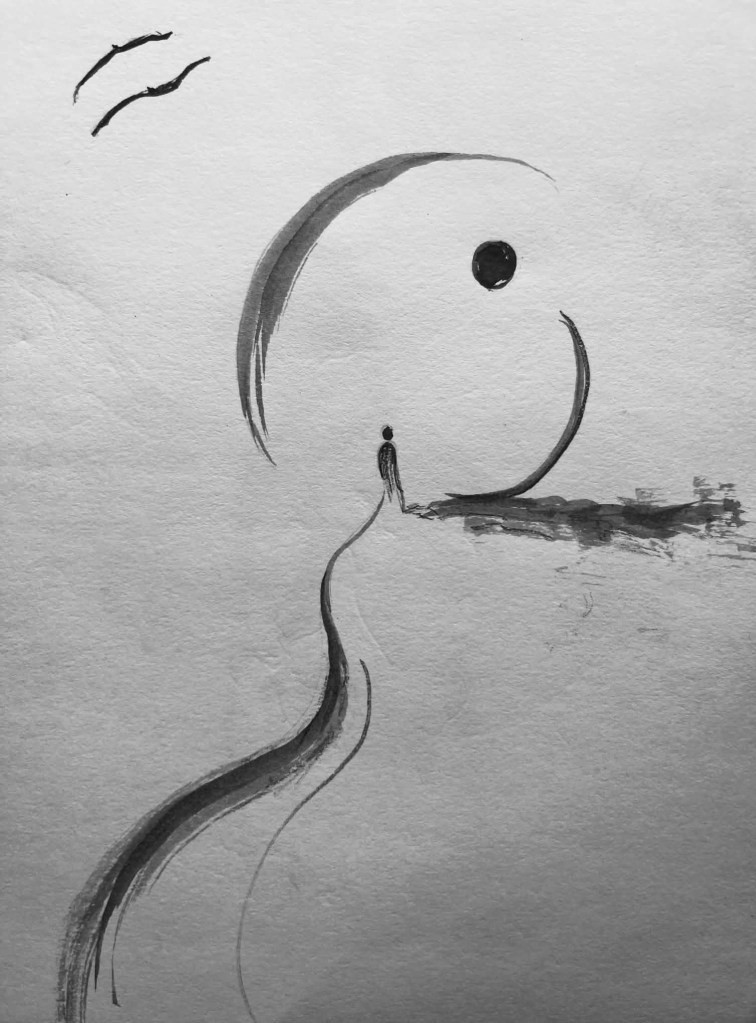
Light essentially casts away darkness. Therefore, the Sun is good, and its emergence is essential to continue the tussle of right over wrong. Although, if you think about it, the sun technically doesn’t banish the shadow it, creates it. The only time there isn’t a shadow is at noon, once a day for one minute, give or take a few seconds here and there. Every other time; everywhere we go in the day, there is ‘darkness’ always attached to us as our shadow. In a literal sense it just confirms that we’re 3D non-transparent beings and maybe that’s all there is to it.
“How am I to be substantial if I do not cast a shadow? I must have a dark side also if I am to be whole.” – Carl Jung.
.
.
Egyptian Queen Nefertiti revolutionized the worship of the Sun around 1330 BC; she was probably the only known Sun Queen from a historical sense. In mythology there are just two cultures where the Sun god is a woman. The Japanese and the Nordic. Both Amaratesu and Sol have siblings that are Moon Gods. Sol in a similar way to Ra travels across the sky on a fiery horse-drawn chariot. Amaterasu stays still in one place, and her influence and warmth reaches the Earth on its own accord.
Galileo’s Heliocentric model was observed and confirmed around the 16th Century. The Japanese Shinto religion was roughly founded around the 3rd Century. Now if Galileo ever had any communication with the eastern philosophies and religions… I would never know, but it cannot be ruled out and hence, is fun to ponder.
History, mythology and philosophy help us make sense of the world around us. The world works better in dualism. Night and day. Push and pull. The atom has a proton and an electron, the negative and a positive charge create the electromagnetic field for the tiny particle in turn creating the building blocks of everything and everyone on this planet.
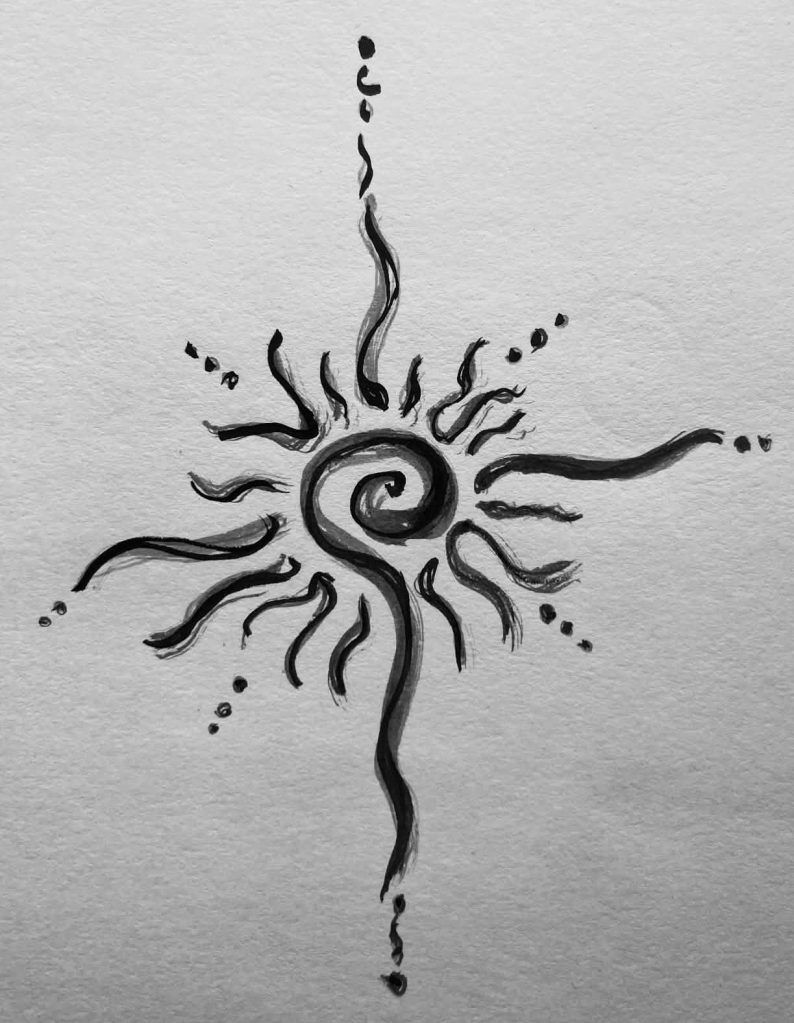
And of course, at the end of the day, we are all light… and shadow.


Leave a Reply